
Artificial Intelligence (AI) continues to revolutionize industries, workflows, and daily life in 2025. From healthcare to finance, education to entertainment, AI systems are enhancing efficiency, enabling personalization, and driving innovation. This article explores the latest trends, applications, and implications of AI across multiple sectors.
1. AI in Healthcare
AI algorithms assist in diagnostics, personalized treatment plans, and predictive healthcare. Machine learning models analyze medical images, electronic health records, and genetic data to detect diseases earlier and more accurately. AI-driven telemedicine platforms offer remote consultations, enhancing access and convenience for patients worldwide.

2. AI in Finance and Banking
Financial institutions leverage AI for fraud detection, risk assessment, algorithmic trading, and customer service. Chatbots provide 24/7 support, while AI-driven analytics help investment firms identify market trends and optimize portfolio performance. Regulatory compliance is also streamlined using AI monitoring tools.
3. AI in Education and E-Learning
AI-powered adaptive learning platforms deliver personalized content based on student performance. Virtual tutors provide real-time guidance, while AI systems analyze engagement metrics to improve instructional strategies. These technologies enhance learning outcomes and prepare students for future careers in AI-driven industries.
4. AI in Manufacturing and Industry 4.0
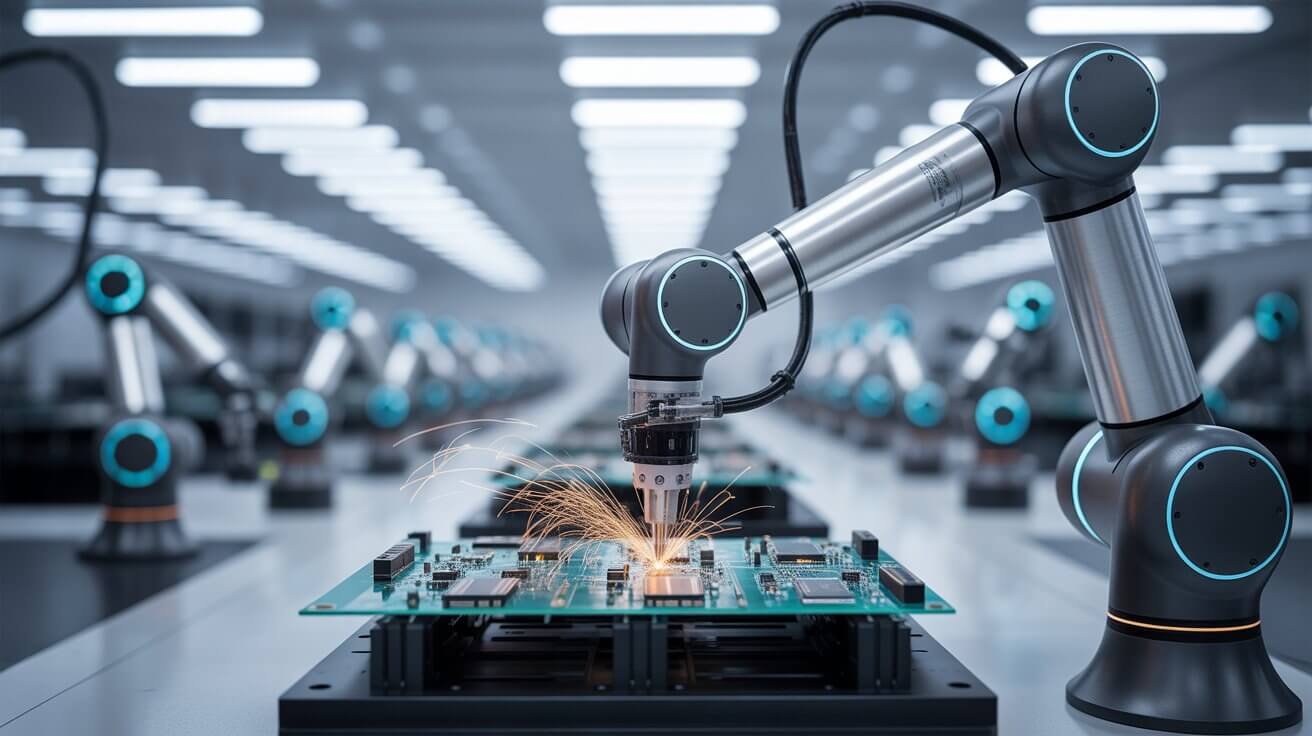
Smart factories integrate AI for predictive maintenance, quality control, and supply chain optimization. AI systems monitor equipment, anticipate failures, and schedule maintenance proactively. Robotics and AI-driven automation increase efficiency, reduce errors, and optimize production processes.
5. AI in Transportation and Autonomous Vehicles
Autonomous vehicles use AI for navigation, obstacle detection, and decision-making. AI enhances traffic management, ride-sharing, and logistics optimization. Predictive analytics improve safety, fuel efficiency, and delivery timelines, transforming urban mobility and transportation industries.

6. AI in Entertainment and Media
Content creation, recommendation systems, and virtual experiences are increasingly AI-driven. AI analyzes user preferences to deliver personalized media, including music, video, and news. AI-generated content and virtual influencers are shaping entertainment trends and enhancing engagement with audiences worldwide.
7. AI in Cybersecurity
AI protects digital infrastructures by detecting threats, predicting attacks, and automating responses. Machine learning models identify anomalies in network traffic, prevent data breaches, and enhance system resilience. AI-powered threat intelligence improves decision-making and reduces response times to cyber incidents.
8. AI in Smart Cities
Urban management leverages AI for traffic optimization, energy efficiency, waste management, and public safety. Sensors and predictive analytics allow cities to adapt in real-time, improving residents’ quality of life. AI-integrated infrastructure supports sustainable urban development and smarter resource allocation.
9. Natural Language Processing and Conversational AI
NLP and conversational AI are transforming human-computer interaction. Virtual assistants, chatbots, and AI translators enable seamless communication across languages and devices. AI analyzes sentiment, context, and intent to provide accurate, real-time responses in customer service, education, and healthcare.
10. AI in Robotics and Automation
Robotics equipped with AI capabilities perform complex tasks in manufacturing, healthcare, logistics, and research. Collaborative robots (cobots) work alongside humans, enhancing productivity and safety. AI enables autonomous decision-making, precision, and adaptability in various operational environments.

11. Ethical AI and Governance
The deployment of AI raises ethical, privacy, and governance challenges. Organizations are developing frameworks for responsible AI, ensuring fairness, transparency, and accountability. Policies and regulations guide AI development while protecting individuals from bias and misuse.
12. AI in Research and Scientific Discovery
AI accelerates scientific research by analyzing large datasets, simulating experiments, and generating predictive models. From drug discovery to climate modeling, AI helps researchers identify patterns, test hypotheses, and uncover insights faster than traditional methods.
13. AI in Everyday Life
From smart homes to personal devices, AI enhances daily life through automation, personalization, and convenience. Voice assistants, AI-driven recommendations, and home automation systems create intelligent environments that adapt to individual preferences and habits.
14. The Future of Work with AI
AI augments human work by automating repetitive tasks, providing insights, and enabling creativity. Employees can focus on strategic, creative, and high-value activities while AI handles operational work. Reskilling and continuous learning ensure workforce adaptability in AI-integrated workplaces.
15. Conclusion
AI in 2025 is transforming industries, workflows, and daily life. From healthcare and finance to education, transportation, and smart cities, AI enhances efficiency, personalization, and innovation. Ethical implementation, governance, and continuous learning are crucial to maximize AI’s potential. By embracing AI responsibly, societies can unlock unprecedented opportunities, improve quality of life, and drive sustainable technological progress.