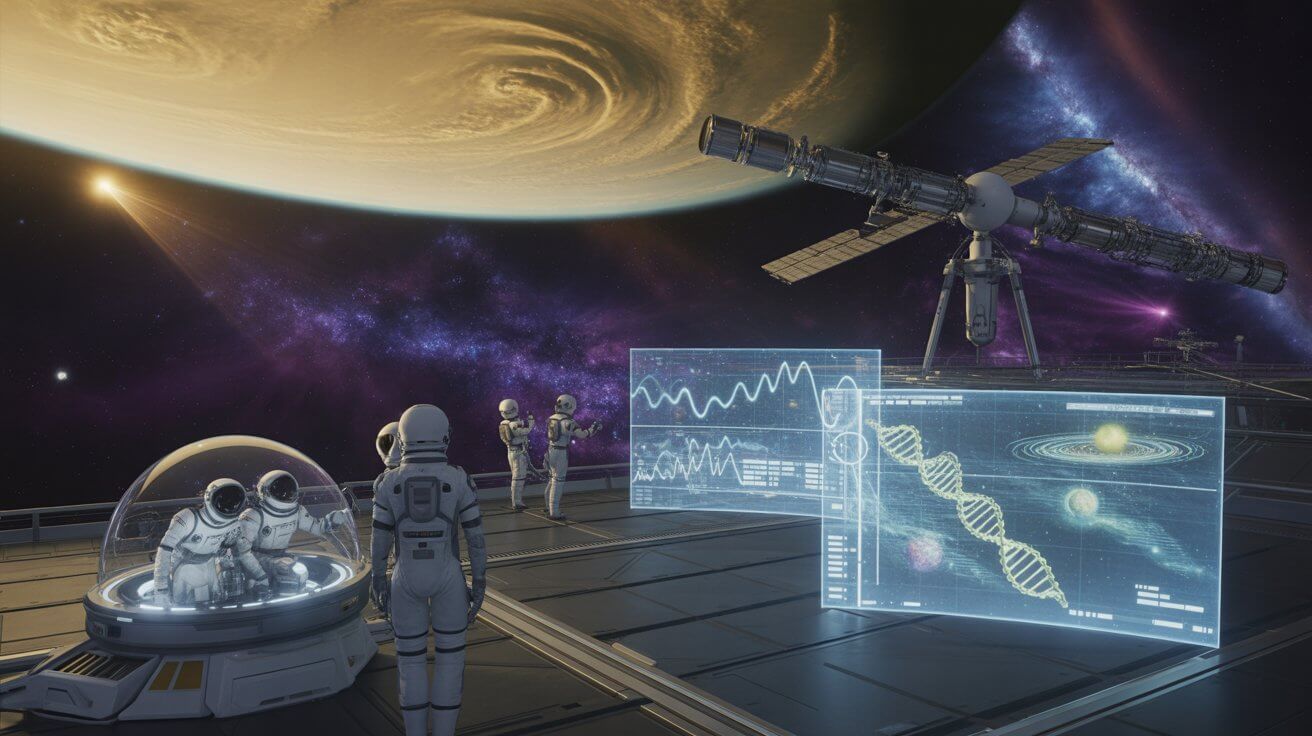
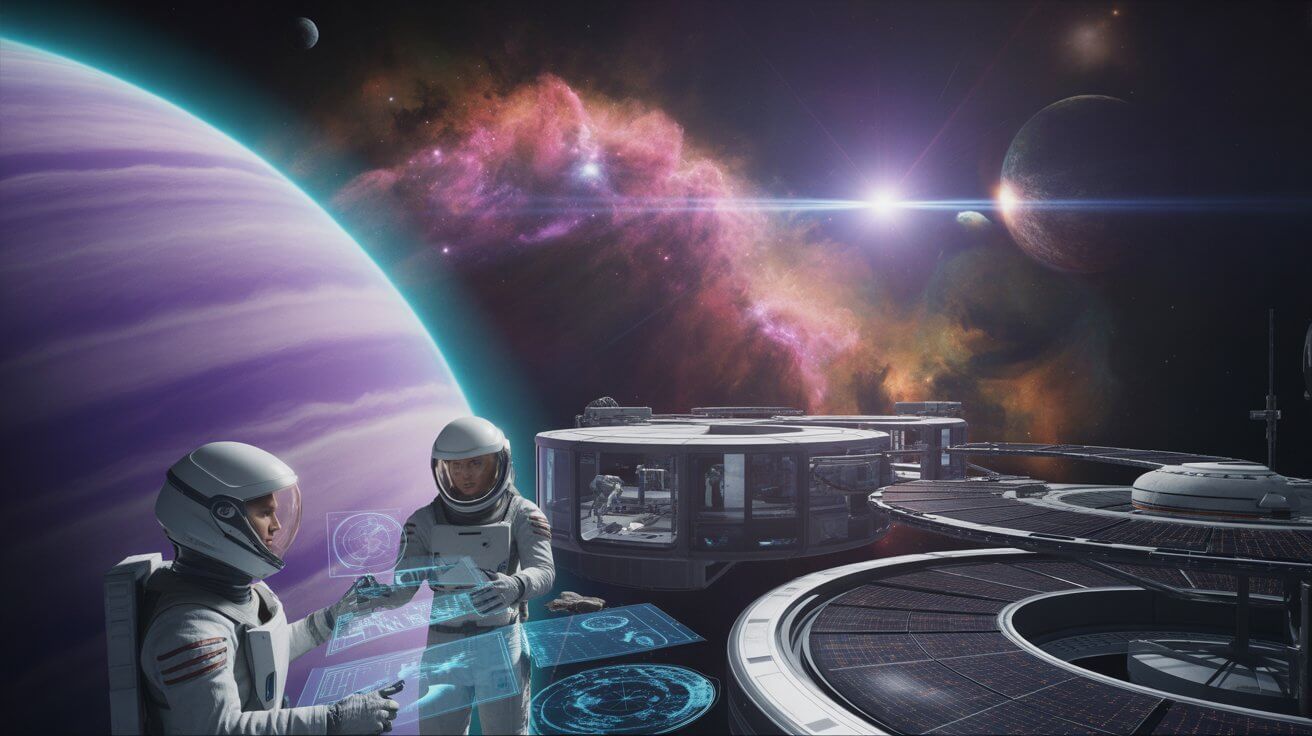
2025 marks a transformative year for space missions and interstellar exploration. Advances in propulsion systems, AI-assisted navigation, and spacecraft design are enabling humanity to explore distant planets, moons, and star systems. This article explores the latest innovations in space missions, interstellar probes, and technologies that are expanding the boundaries of human exploration.
1. Next-Generation Propulsion Technologies
Innovations in propulsion, such as nuclear thermal engines, ion thrusters, and solar sails, are accelerating interplanetary travel. These systems provide higher efficiency, reduced fuel consumption, and longer mission ranges, making it feasible to explore Mars, Jupiter’s moons, and beyond. AI-assisted trajectory optimization ensures precision navigation and resource efficiency.

2. AI-Assisted Navigation and Autonomy
AI enables spacecraft to operate autonomously in deep space, handling navigation, system diagnostics, and decision-making. Autonomous probes can adjust trajectories, avoid obstacles, and optimize energy use without real-time human intervention. This capability is critical for interstellar missions where communication delays exceed minutes or hours.
3. Mars and Lunar Missions
Robotic and crewed missions to Mars and the Moon are expanding scientific understanding and preparing for long-term colonization. AI-driven rovers collect samples, analyze terrain, and detect environmental hazards. Lunar bases serve as testbeds for life support systems, habitat construction, and resource utilization techniques essential for sustained extraterrestrial presence.
4. Asteroid and Comet Exploration
Asteroids and comets offer insights into solar system formation and potential resources. AI-assisted probes analyze composition, map surface features, and identify mining prospects. Sample return missions allow scientists to study primordial materials, enhancing understanding of planetary evolution and resource potential.
5. Interstellar Probe Concepts
Breakthrough concepts for interstellar probes include lightweight spacecraft propelled by laser-driven sails, capable of reaching nearby star systems in decades rather than centuries. AI guides navigation, data collection, and communication, enabling autonomous operation over vast distances.
6. Planetary Defense and Hazard Monitoring
Monitoring near-Earth objects (NEOs) is critical for planetary defense. AI-enhanced telescopes and satellites track asteroids, evaluate collision probabilities, and simulate mitigation strategies. These systems ensure timely response to potential threats while informing global defense initiatives.

7. Deep Space Communication Innovations
Interstellar exploration requires robust communication networks. Laser communication systems, AI-optimized data compression, and autonomous relay satellites enable faster, more reliable data transfer across vast distances. This allows scientists to receive mission-critical information in near real-time, despite light-year separations.
8. Human-Machine Collaboration in Space
Crewed missions increasingly rely on AI for operational support, medical monitoring, and environmental control. Human astronauts collaborate with AI systems to make strategic decisions, optimize resource use, and enhance mission safety. This collaboration ensures efficiency and resilience during long-duration missions.
9. Innovations in Space Habitats
AI and robotics play a key role in building sustainable habitats on the Moon, Mars, and orbiting stations. Automated construction, 3D printing using in-situ materials, and AI-assisted life support systems create resilient environments that support human life in harsh extraterrestrial conditions.
10. Space Tourism and Commercial Exploration
Commercial ventures are entering the space exploration era, offering orbital flights, lunar tours, and private research missions. AI systems ensure safety, optimize logistics, and enhance passenger experience, marking the beginning of a new era of accessible space exploration for non-professional astronauts.

11. Robotics and Autonomous Rovers
Robotic explorers equipped with AI navigate challenging terrain, perform experiments, and relay high-quality data. Autonomous rovers on Mars and other celestial bodies conduct geological surveys, atmospheric analysis, and resource identification, complementing human missions and maximizing research outcomes.
12. AI in Space Research and Data Analysis
Space missions generate massive volumes of data. AI algorithms process images, telemetry, and environmental measurements to identify anomalies, trends, and scientific insights. Machine learning enables predictive maintenance for spacecraft, ensuring optimal performance and mission success.
13. Global Collaboration in Interstellar Exploration
International partnerships enhance exploration capabilities through shared resources, joint missions, and collaborative research. AI platforms coordinate operations, data analysis, and simulation, maximizing scientific output and reducing duplication of efforts across space agencies.
14. Ethical and Safety Considerations
Long-duration missions and AI-assisted autonomy require ethical frameworks to ensure crew safety, responsible use of AI, and sustainable exploration practices. International guidelines and mission protocols govern AI deployment, environmental protection, and equitable access to space resources.
15. Conclusion
Innovations in space missions and interstellar exploration in 2025 are revolutionizing humanity’s approach to the cosmos. Advanced propulsion, AI-assisted navigation, autonomous probes, and sustainable habitats enable deeper exploration than ever before. These breakthroughs expand scientific knowledge, support potential colonization, and inspire future generations. By integrating AI, robotics, and international collaboration, humanity is poised to unlock the mysteries of the universe, pushing the boundaries of exploration and discovery.